
Endoscopy Bite Block Manufacturing
PP injection molded endoscopy bite blocks for EGD, ERCP, and bronchoscopy procedures, produced in ISO 8 cleanroom conditions in Thailand.
Contact us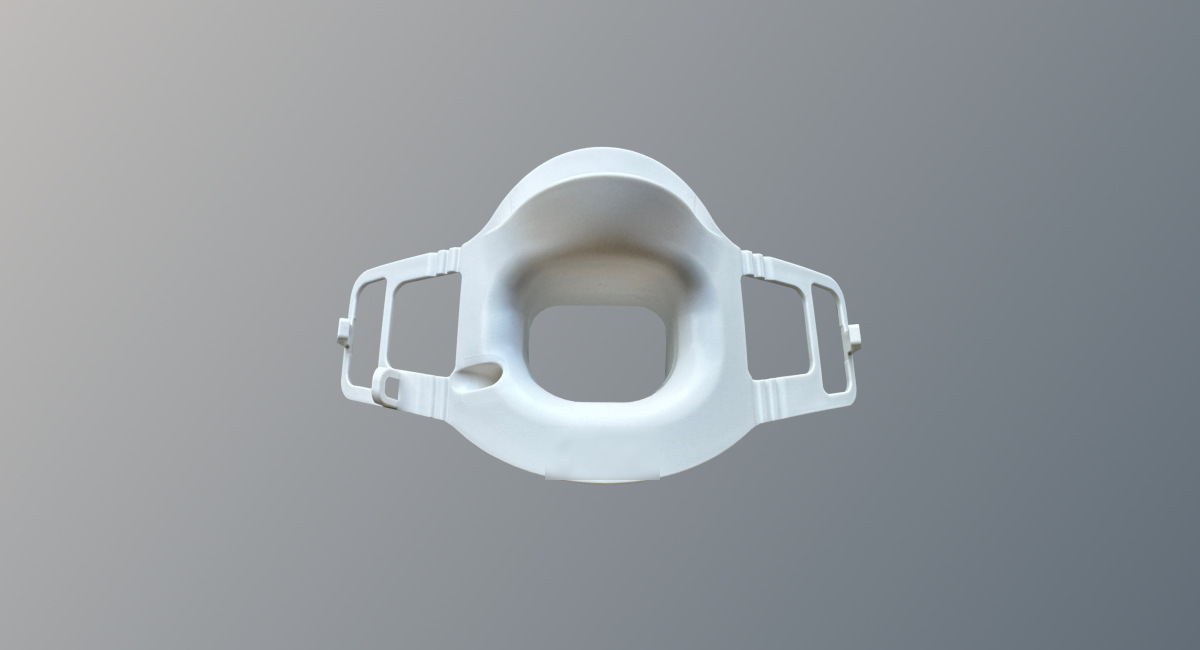
Why endoscopy bite block molding is harder than it looks
An endoscopy bite block combines a patient bite surface, an adjustable ratchet strap mechanism, and a central bore for scope or tubing pass-through, all molded as a single PP part. There’s little room for cavity-to-cavity variation: the ratchet teeth have to engage consistently for the strap to hold, and the bite surface has to be free of flash or sink marks since it’s a direct patient-contact surface. For buyers, the challenge isn’t finding someone who can mold PP — it’s finding a supplier who can hold that combination of features consistently at volume, with the documentation a patient-contact part requires.
Where tolerance risk shows up
- Ratchet-tooth engagement features must mold consistently to maintain adjustable strap fit
- Bite surface geometry affects patient comfort and stability during the procedure
- Central bore dimensions must stay consistent for scope or tubing pass-through
- Single-shot, multi-feature design leaves little tolerance for cavity-to-cavity variation
Where supply risk shows up
- Patient-contact parts require documented process control and traceability
- Warpage or sink marks on visible surfaces affect both fit and perceived quality
- High-volume programs need consistent output across multi-cavity tooling
- Buyers need a supplier that welcomes audits and supports validation documentation
Injection molding capabilities for oral bite-protection devices
VEM molds endoscopy bite block components for upper GI and airway procedure devices, from tooling through high-volume production.
ISO 13485 injection molding
Endoscopy bite blocks molded under an ISO 13485 quality management system, with documentation suited to medical device supply chains.
ISO 8 cleanroom molding in Thailand
Production runs in an ISO 8 cleanroom environment as the standard for this patient-contact component.
Molds built by VEM Shenzhen
Tooling is designed and built in-house at VEM Shenzhen, giving direct control over cavity accuracy for the bite surface and ratchet features.
Multi-cavity tooling
Multi-cavity molds are supported to reach 100k+ parts/year output while holding ratchet-tooth and bore geometry consistently across cavities.
Hot runner mold capability
Hot runner tooling is available where cycle time, material usage, and part consistency benefit from it.
In-house mold maintenance
Mold maintenance and correction are handled in-house, reducing downtime and turnaround time on tool adjustments during a production run.
Ratchet-strap mouthpiece molding, DFM to validation
Design & tooling
DFM review before tool design begins
Mold flow analysis to identify warpage or fill issues before cutting steel
Customer confirms DFM before VEM continues with tool design
Transfer tools can be reviewed if the customer is bringing an existing mold
Multi-cavity and hot runner tooling supported
Quality & validation
ERP-based lot and batch traceability
Dimensional and visual inspection on molded components
IQ/OQ/PQ support, process validation, and CPK studies where required
Validation scope defined together with the customer, based on product risk and drawing requirements
Customer audits welcomed as standard practice
PP cleanroom molding for GI and airway procedure mouthpieces
Endoscopy bite block components are molded in PP in a Thailand-based cleanroom environment.
- Material: PP (polypropylene), selected for durability and flex resistance in a patient-contact molded part
- Cleanroom: ISO 8 cleanroom molding for this product
- Inspection: Dimensional and visual inspection performed on molded parts for this product scope
- Scope: VEM molds the endoscopy bite block component; molding only, no downstream assembly for this part
From RFQ to production for oral interface mouthpiece parts
RFQ review
Drawings, application details, and volume are reviewed to scope the program.
DFM
Design for manufacturability and mold flow analysis, confirmed with the customer.
Tooling
Mold design and build at VEM Shenzhen, including multi-cavity and hot runner options.
Validation
IQ/OQ/PQ and CPK studies scoped together with the customer as required.
Production
ISO 8 cleanroom production in Thailand with ERP-based lot traceability.
Clinical applications for molded bite-protection mouthpieces
Upper GI endoscopy (EGD)
Endoscopy bite blocks used during esophagogastroduodenoscopy to protect patient teeth and the endoscope shaft.
ERCP procedures
Endoscopy bite blocks used during ERCP to secure oral access and protect equipment throughout the procedure.
Bronchoscopy procedures
Endoscopy bite blocks used during airway scope procedures to protect the device and stabilize patient bite.
Endoscopy bite block manufacturing FAQ
What is an endoscopy bite block used for?
It protects a patient’s teeth and the medical scope during upper GI and airway procedures such as EGD, ERCP, and bronchoscopy.
What material is used for endoscopy bite block manufacturing?
PP (polypropylene) is used for this component, selected for durability and flex resistance in a patient-contact molded part.
Do you offer cleanroom molding for endoscopy bite blocks?
Yes. This part is molded in an ISO 8 cleanroom environment in Thailand.
What inspection is performed on molded bite blocks?
Dimensional and visual inspection is performed for this product scope, based on the customer’s drawing requirements.
Do you provide molded parts only, or assembly as well?
Molding only. VEM molds the endoscopy bite block as a single PP component; no downstream assembly is performed for this part.
What volumes can VEM support for this product?
Multi-cavity tooling supports production volumes of 100k+ parts per year, with capacity to scale depending on the program.
Where are endoscopy bite blocks manufactured?
Molding takes place at VEM’s cleanroom facility in Thailand, with tooling designed and built in-house by VEM Shenzhen.